

Everything you need for a warm welcome and a healthy start.
Bringing home a batch of adorable ducklings is an exciting adventure! Whether you're a seasoned poultry keeper or raising ducks for the first time, those first few weeks set the tone for a healthy, happy flock.
Setting up the brooder
When your ducklings first arrive, they'll need a safe, warm environment to thrive. Set up a brooder box or large storage container lined with soft bedding like pine shavings or straw. Keep the space quiet and predator-proof — away from household pets and drafts.
A simple heat lamp or ceramic heat emitter works perfectly for warmth. Maintain a temperature of 90°F (32°C) for the first week, then gradually reduce it by 5°F each week until they're fully feathered. Watch your ducklings' behavior as your guide: huddled under the lamp means they're cold; scattered far away means it's too warm.
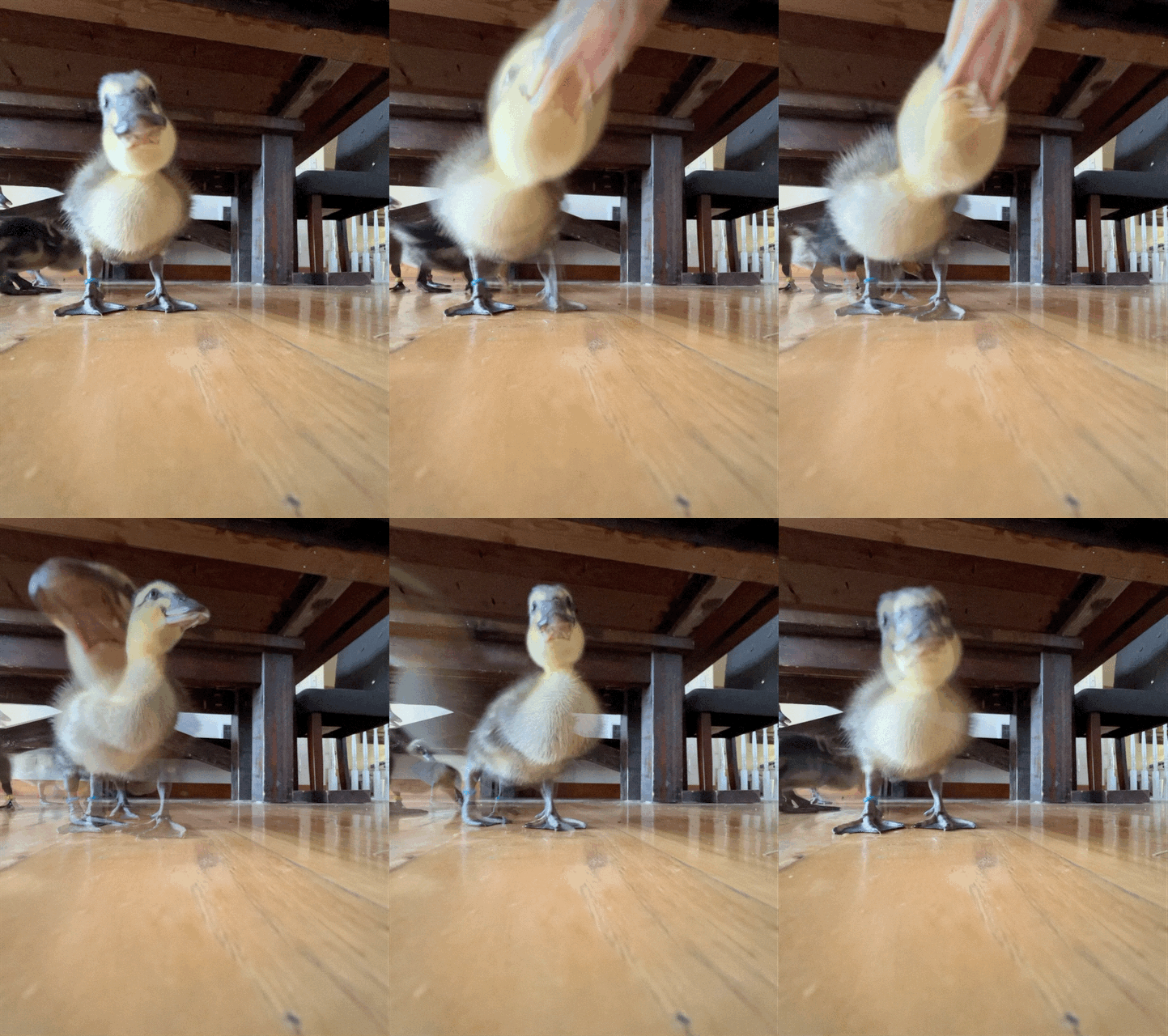
Ducklings exploring a farmhouse kitchen floor at M7.
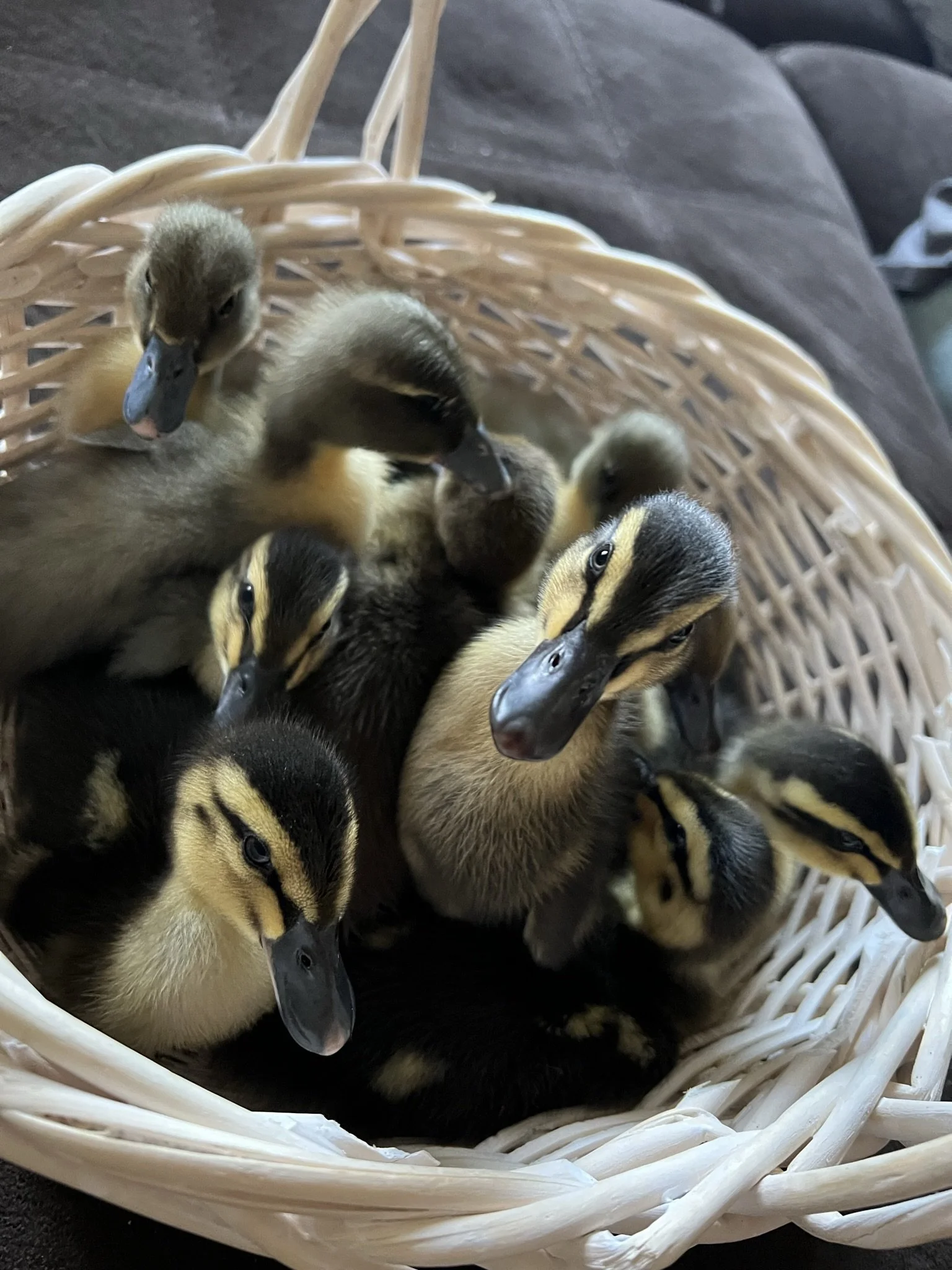
basket of life
Food & water basics
Ducklings have a serious love of water from day one — it's also crucial for their digestion. Provide fresh water in shallow dishes they can dip their bills into, and change it daily to keep things clean and disease-free.
Pair clean water with a high-quality duckling starter feed (20–24% protein) to fuel their rapid growth. Avoid medicated chick starter, as the dosage is formulated for chicks, not ducks. Keep bedding as dry as possible — wet bedding combined with waterers is the number one cause of respiratory issues in young ducklings.
GOOD TO KNOW
Ducklings will splash water everywhere — that's just duck life. Elevating the waterer slightly on a small platform or placing it over a drain tray keeps the brooder drier and makes your life easier.
When are they ready to go outside?
Most ducklings can transition outdoors between 7–10 weeks of age, depending on the weather and how fully their adult feathers have grown in. Look for these signs before making the move:
🪶Most fluffy down replaced by adult feathers
🦆Large enough to hold their own from predators
🌡Outdoor temps consistently above 50°F (10°C)
💧Showing interest in water beyond just drinking
Start with supervised outdoor time in a secure pen or run, gradually increasing their time outside over a week or two. Bring them back indoors at night until the weather is stable and they're fully acclimated to their permanent coop.
A few final thoughts
Raising ducklings is incredibly rewarding. These charming little ones grow quickly, and soon you'll have a productive, personality-filled flock. Remember that patience, cleanliness, and proper nutrition are the keys — and every flock is different, so don't hesitate to adjust your approach based on what works best for your birds.
Shop the Post
We’ve gone through a lot of gear to find what actually stands up to messy ducklings! You can see the specific supplies we trust here at the ranch: [M7 Trading Post: Ducklings & Brooders List].
Happy duckling parenting!