

Mark your calendar: M7 Trading Post has springtime ducklings hatching on April 12, and every two weeks thereafter! If you're thinking about raising ducklings this spring, you've come to the right place. Let's walk through what you'll need to set up a proper brooder and care for your new feathered friends.
Getting Ready: The Brooder Setup
Before your ducklings arrive, you'll need a safe, warm space called a brooder. Think of it as a nursery—ducklings are vulnerable when they're young, and your brooder keeps them protected from predators, drafts, and temperature fluctuations.
Brooder Essentials
Container: A large plastic storage tote, kiddie pool, or wooden frame works well. You'll need about 2-3 square feet per duckling initially, expanding to more space as they grow.
Bedding: Pine shavings (not cedar) work best. Avoid fine sawdust, which can cause respiratory issues. Plan to change bedding frequently—ducklings are messy!
Heat lamp: A 250-watt infrared lamp or heat bulb is essential. Start at 95°F for the first week, then reduce by 5°F each week until they're fully feathered.
Thermometer: Don't guess. Get an accurate thermometer to monitor brooder temperature.
Water and food dishes: Use shallow, stable containers. Ducklings love water, so expect splashing and wet bedding.
💡 Pro Tip: Watch your ducklings' behavior to gauge temperature. If they huddle directly under the lamp, they're cold. If they scatter to the corners, they're hot. Comfortable ducklings spread out evenly around the brooder.
Duckling Care: The First Weeks
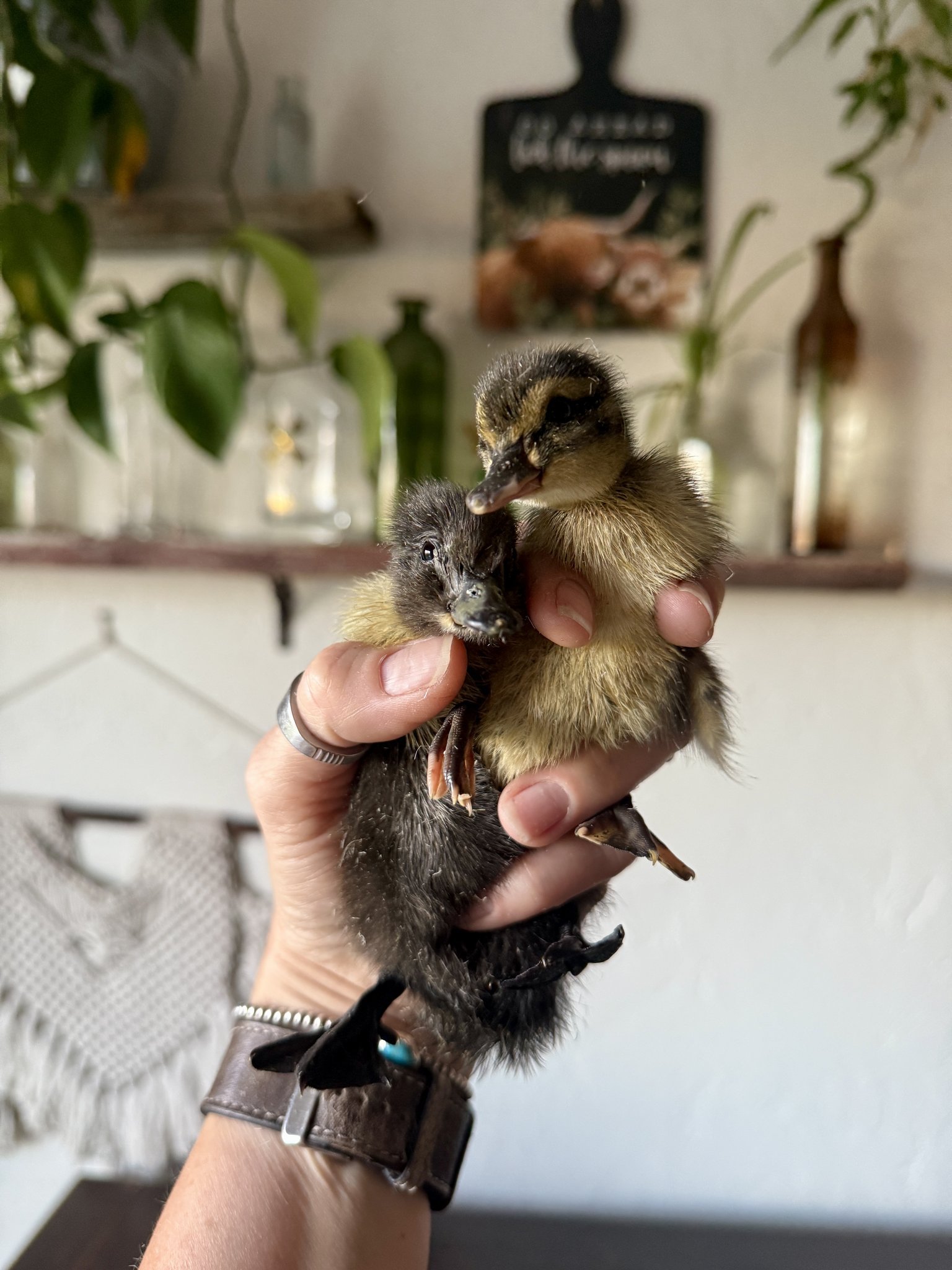
little helpers
two of our newest heritage ducklings. hardy, curious, and ready for life in the upper snake river valley.
Feeding Your New Ducklings
Ducklings have big appetites and grow fast. Here's what you need to know:
Feed: Use a starter feed formulated for waterfowl (not chicken starter). It contains the right balance of nutrients, especially niacin, which ducklings need for bone and leg development.
Feeding schedule: Ducklings should eat 4-6 times daily for the first two weeks, then you can transition to 2-3 times daily.
Portions: Feed what they'll consume in 15-20 minutes. Leftover wet feed attracts mold and bacteria.
Grit: If you're offering anything beyond commercial feed (like greens), provide a small dish of grit to help them digest.
Water Management
Ducklings need water more than chickens do—it's essential for feeding, eye health, and their natural behaviors. However, wet bedding invites problems:
Use elevated water dishes or nipple waterers to minimize splashing.
Check water at least twice daily. Clean water is critical.
Change bedding more frequently than you would for chicks (every 2-3 days initially).
Do NOT let them swim in the brooder. They'll soak the bedding and risk hypothermia. Swimming can wait until they're older and in an outdoor setup.
⚠️ Important: Even though ducklings are water birds, young ducklings in a brooder can get chilled from wet bedding and lose heat too quickly. Keep their water for drinking only until they're at least 3-4 weeks old and have proper outdoor housing.
Health Checks and Common Issues
Pasty butt: A condition where bedding sticks to their rear end. Clean gently with warm water and a soft cloth. This is often a sign of stress or incorrect temperature.
Lethargy or refusal to eat: A sign something's wrong. Check temperature, water cleanliness, and watch for signs of illness.
Weak legs: Often a niacin deficiency. Ensure you're using waterfowl starter feed. Niacin supplements can help.
Isolation: If one duckling seems sick, separate it from the others to prevent spread and allow you to monitor it closely.
Creating the Right Environment
Light and Dark Cycles
Ducklings need rest just like you do. While some continuous light helps them find food and water in the first few days, provide a natural dark period after the first week. A 14-16 hour light cycle (combining your heat lamp's light and room light) mimics natural conditions and promotes healthy growth.
Ventilation
Good air flow is crucial.
Shop the Post
Starting your first brood can be a bit overwhelming, so I’ve gathered all the essentials I use—from heaters to electrolytes—into one spot: [Shop the M7 Duckling & Brooder Essentials].